What Keeps a Commercial Cooking Exhaust System Working Properly?
Commercial cooking produces much more than food: hot, greasy air, smoke, steam, odors, and airborne particles. If these emissions aren’t captured and controlled properly, they can affect the comfort, health, and safety of your business, employees, and customers.
Exhaust Systems Do More Than Move Smoke
Most kitchen owners understand the purpose of commercial cooking exhaust systems: removing smoke, cooking fumes, and other emissions from cooking equipment, and discharging them outside the kitchen. What gets lost in the shuffle are the many other functions a cooking exhaust system performs, and how all the pieces in a cooking exhaust system work together.
Let’s take a deeper dive into how a cooking exhaust system works.
Here’s the process:
- A hood located directly above cooking equipment captures heat and emissions from that equipment (known as the thermal plume).
- Grease filters located in the hood trap larger grease particulates before they can enter the duct.
- Ductwork transports emissions-laden air from the kitchen.
- An exhaust fan creates the suction to move air through the ducts, filters, hood, and outside the kitchen.
- All emissions (including grease particulates) are deposited outside the building.
Every Component Has a Role
Each part of the exhaust system depends on the other parts to perform. For example, the most powerful exhaust fan in the world won’t help you if the hood isn’t capturing the thermal plume. Similarly, the cleanest grease filters won’t help you if the wrong exhaust fan is pulling too much air through the wrong-sized duct.
What Happens When a Commercial Exhaust System Isn’t Working Properly?
Here are a couple examples of how problems in exhaust systems develop.
If the exhaust system is overloaded, improperly sized, or hasn’t been cleaned regularly, smoke and heat can seep into the kitchen. Employees in the kitchen could then experience excessive heat and be subjected to cooking odors and smoke – check https://pmc.ncbi.nlm.nih.gov/articles/PMC9880388/ for more details.
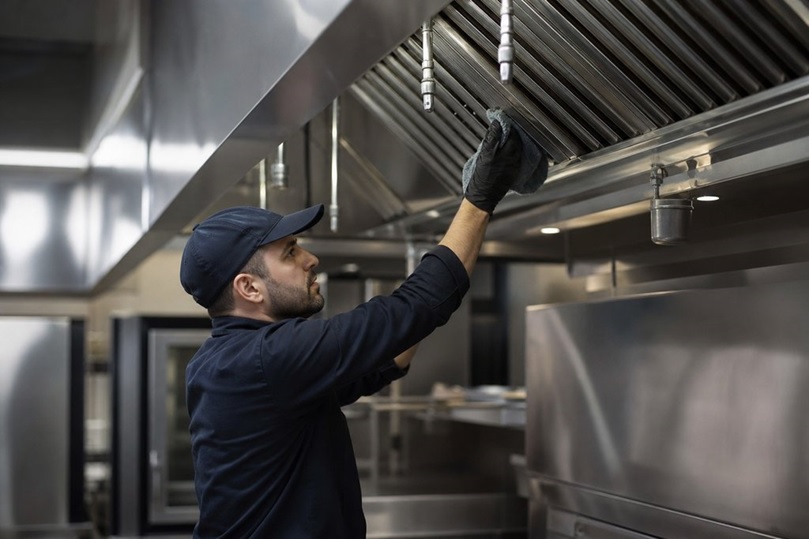
When emissions rise into a hood, much of the vapor cools as it comes into contact with the hood and grease filters. This cooling process deposits grease throughout the system, on filters, inside ducts, around the fan, and on other surfaces in and around the hood. Over time, grease can build up in the exhaust system, impeding system performance, making cleaning more difficult, and presenting a potential fire hazard.
If odor control and/or emission control is an issue, supplemental equipment (mechanical filtration, electrostatic precipitators, odor control media, etc.) may be helpful.
If there are problems controlling air movement into or out of your building (for more information, as discussed below), cooking exhaust system performance can be negatively impacted. Without properly introducing makeup air, the kitchen may be put under negative pressure, causing doors to be hard to open, drafty conditions, and other issues. Introducing makeup air in the wrong location or blowing makeup air directly in front of a hood could negatively impact capture performance at a hood by pushing smoke out of the capture area. Makeup air should not be an afterthought; commercial cooking exhaust and makeup air systems should be thought of together and planned accordingly.
Practical Dos and Don’ts for Kitchen Teams
Now that you have a deeper understanding of all the moving parts (literal and figurative) in commercial cooking exhaust systems in California, let’s go over the dos and don’ts of managing your commercial cooking exhaust systems.
DO be cognizant of the equipment installed in your kitchen and changes you might make over time. Exhaust systems can be stressed when there’s a change in kitchen equipment. Charbroilers, fryers, and other high-BTU, high-grease cooking appliances require more from cooking exhaust systems than ovens, hot boxes, and other equipment that generate lower levels of heat, smoke, and grease.
DON’T worry if supplemental emission control or odor control equipment might be overkill. Although these pieces of equipment can help control odors and protect ductwork and fans in some applications, not every kitchen warrants it. If your cooking equipment doesn’t generate heavy smoke or greasy emissions and doesn’t leave odors lingering in and around your building, you might be fine without supplemental odor/emission control equipment.
DO jot down any issues you see or your team notices with how your commercial kitchen exhaust system is operating. Noting any issues can help technicians determine whether a problem is purely a cleaning issue, a system issue (hood, fan, supplemental odor control equipment, etc.), or an installation/design issue. Here are some things to watch for: smoke escaping the kitchen hood while equipment is in use, stronger cooking odors in other areas of your building, grease build-up on surfaces around the kitchen hood, unusual fan operation (i.e., rattling, louder noises than typical), higher-than-normal heat levels in the kitchen, etc.
Modifications, Repairs, and Upgrades Require Evaluation
If you think supplemental odor/emission control equipment or modifications to your kitchen hood or kitchen exhaust fan are necessary, get a free on-site evaluation. We’ll analyze the BTU output in your kitchen, changes that may have impacted performance, air movement in and around your kitchen, cleaning frequency, makeup air sources, the path exhaust air travels in your building, etc. to help you identify the best exhaust system improvements for your business.