6 Essential Steps for Scaling Your Beverage Production
Many producers who start scaling up think that the difficult part is producing more of the liquid. It isn’t. The difficult part is packaging that liquid in a way that’s consistent, fast, and cheap enough to maintain your margins. When you transition from small-batch to actual volume, packaging can no longer be something you figure out after the product is made. It’s the part that will determine if you’re making money.
Step 1: Standardize Formulations And SOPs
Most small operations run on feel. Someone tastes the batch, adjusts by instinct, moves on. That’s fine at a few hundred cases a year. It stops working the moment there’s more than one shift running, or more than one site.
“A splash of this” isn’t a process. It’s not teachable, and it definitely isn’t scalable. New hires can’t learn the way the founder did – by standing next to them for five years. There’s no time for that anymore.
So before the bottling line gets touched, the product has to get turned into numbers. Exact weights. Exact ratios. Process steps written down to the machine setting. These need to be real working documents – the kind that could go into the hands of someone who’s never worked a shift, and by the end, they’d hand over a batch a ten-year veteran couldn’t pick out in a blind tasting.
Step 2: Move From Spot-Buying To Long-Term Supply Contracts
Small-scale producers often buy materials as needed, but the prices are quite uncertain and can change every week. This may work well when you have a small volume, but as business grows, relying on weekly prices can become risky. All it takes is one sudden price increase or a short supply and your whole line could stall.
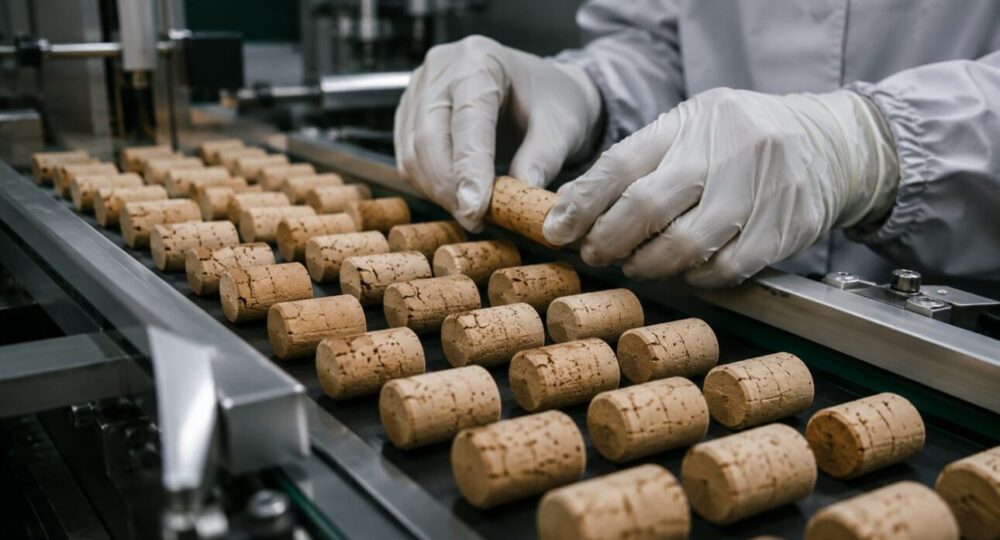
The solution is to get annual or multi-year volume commitments from your main suppliers for certain items like glass, labels, and closures. These agreements also turn your unit economics in your favor. Bulk purchasing ensures that your supply is not disrupted and also reduces your cost per unit, which spot purchasing never will. Take the example of wineries – instead of ordering corks for each case, sourcing bulk corks in advance locks the price and the quantity, ensuring that you don’t run out of corks when your line is supposed to run.
Supply chain lead times matter more than people expect – a two-week delay on closures can shut down a packaging run that took months to schedule.
Step 3: Audit Your Packaging Line For Bottlenecks
Packaging – glass, labels, closures – can run as high as 60% of total cost of goods sold for a craft producer. That number alone should change how scaling gets approached.
Run a simulated bottling and packaging shift. Time it. Find out exactly how many cases the current staff can get out the door in an hour. Then compare that number against the labor cost of a new automated line – not against a theoretical best case, against what’s actually happening on the floor right now. Do it again once the second or third generation of staff rotates through, because turnover in this kind of work is constant. A number based on the original crew won’t hold.
Bottling lines are one of the biggest financial risks a small producer will ever take on. Plenty of brands don’t make it past year three to five, and undercapitalizing the packaging line early is one of the more common reasons why.
Step 4: Match Your Closures To The Speed Of Your Line
A closure that performs fine on a manual or low-speed line can start failing constantly once the line speeds up. Capping at speed is rougher on corks, caps, and crowns than most people expect. Every closure comes off the capper slightly under compression. It’s usually in motion or rotation too, which means fibers, fragments, or residue can rub off during application. Depending on the setup, there’s often downward pressure or an angle on part of the seal right as it exits the line.
None of that is easy to replicate in a cork lab, and it creates a quality risk that simply doesn’t show up at 30 or 60 bottles per minute on a bench-scale or prototype capper. For corked wine or cider, this is where TCA risk stops being a rare complaint and starts becoming a real cost line.
Closures need to be tested at actual target line speed before locking in a supplier at scale. A closure that jams the capping head once every few hundred units doesn’t sound like much – until that failure rate gets multiplied across a full production run.
Step 5: Build Inline Quality Control Into The Line Itself
When you’re producing thousands or millions of units of packaged food or beverages per day, per week, or per hour, spoilage analysis can be a major issue that steals your profits. Just a few too many leakers or a fraction of a percentage point too much of dissolved oxygen or oxygen headspace can multiply over time-to-shelf-life and shelf life.
Oxygen ingress, in particular, deserves attention. It’s invisible at the point of packaging and only shows up weeks or months later as spoiled flavor or shortened shelf life. Catching it inline, rather than through customer complaints, is the difference between a minor line adjustment and a costly recall.
Step 6: Rebuild Your Logistics Around Pallets, Not Cases
Manual case-picking is fine when you’re only shipping a few dozen orders a week. It breaks down when you’re sending full truckloads via freight carriers or 3PLs, who require consistent palletization. Post-pick reconfiguration and consolidation is a massive waste of time and money. Pallets need to be designed and built at the packaging line, not at the end of the warehouse.
Same principles as SKU rationalization apply. The more SKUs you have, the more complex your product packaging will be. And any time spent tweaking and adjusting packaging designs on the production line is time that could be spent running production faster.
Scaling packaging well means fewer surprises, tighter margins, and a supply chain that doesn’t buckle the first time demand spikes. Get the mechanics right and the growth takes care of itself.